
English| EUR
Suggested for you
More currencies
Choose a language
The Gamboa Rainforest Reserve hosts one of Central America's most active sloth rehabilitation programs, where injured and orphaned animals receive veterinary care before potential release. This guide covers logistics, ethical conduct, and what to expect during your visit to the conservation center.
Quick answer
The facility operates Tuesday through Sunday from 10:00 to 16:00, with Monday closures for animal care protocols. Entrance requires a $25 conservation fee per person. Arrive between 10:00 and 14:00 to allow adequate time before the 16:00 closure, especially during Panama's afternoon heat from January through April when animal activity decreases and visitor comfort declines.
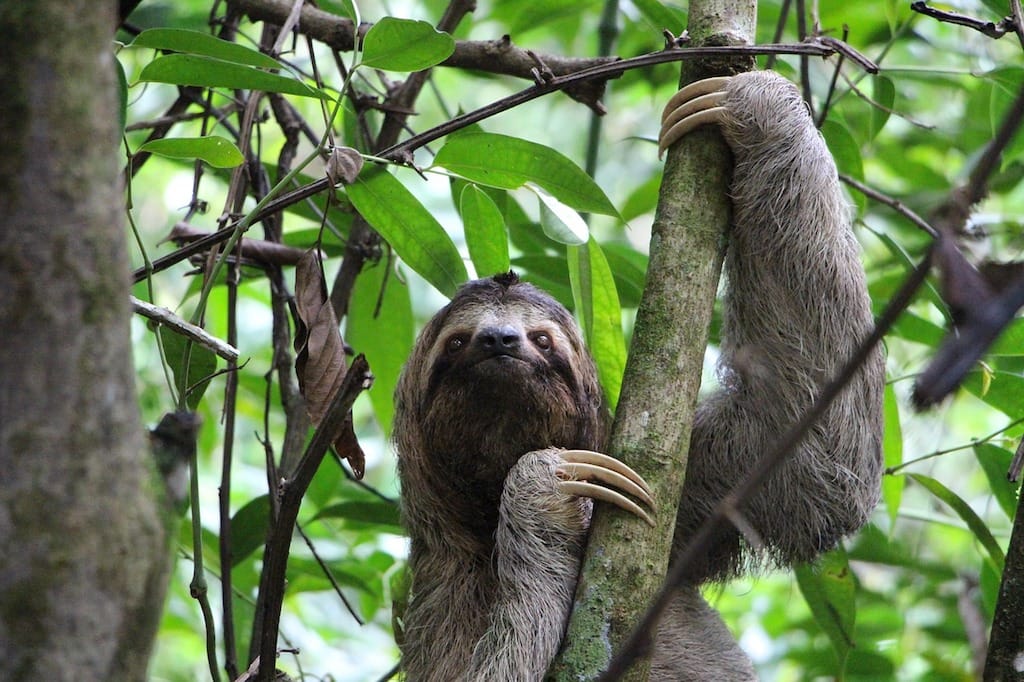
Every sloth admitted to the Gamboa center arrives through Panama's national wildlife rescue network—most as victims of vehicle strikes along the Trans-Isthmian corridor, some as juveniles separated from mothers during illegal pet trade interdictions. The rehabilitation protocol prioritizes minimal human contact: veterinary staff handle animals only during medical procedures, feeding occurs on schedules that mirror wild foraging patterns, and enclosures replicate canopy structure using native Cecropia and Guarumo branches harvested from the surrounding 340-hectare reserve. Visitors observe from designated pathways that maintain a three-meter buffer from enclosures, a distance established through behavioral studies showing that closer proximity triggers stress responses measurable through cortisol sampling. The sloth sanctuary panama operates under permits from Panama's Ministry of Environment requiring annual population audits and release-rate documentation; as of 2026, the center reports a 60% successful reintroduction rate for two-toed sloths and 45% for three-toed species, with the disparity attributed to the latter's specialized dietary requirements and narrower habitat tolerance. The conservation model here differs sharply from commercial animal encounter facilities. No handling occurs, no feeding experiences are sold, and photography restrictions prohibit flash use within five meters of any enclosure. These limitations stem from research conducted at the Slothtitude monitoring project in Costa Rica, which documented how repeated human interaction delays rehabilitative progress by weeks and, in severe cases, renders animals non-releasable. Staff naturalists lead twice-daily interpretive sessions covering sloth physiology—the algae symbiosis that provides camouflage, the multi-chambered stomach that processes toxic leaves, the energy-conservation strategies that limit movement to 40 meters per day in wild populations. Timing matters. Morning arrivals coincide with feeding rotations when animals are most active, and the window before 14:00 avoids both the midday heat spike and the late-afternoon rush when tour groups from Panama City converge on the reserve. The $25 entrance fee funds veterinary supplies, enclosure maintenance, and the salaries of three full-time wildlife rehabilitators trained through partnerships with the Sloth Conservation Foundation. No advance reservations are required, but the facility enforces a 50-visitor cap per hour to prevent overcrowding that compromises animal welfare and visitor experience quality.
“The rehabilitation protocol prioritizes minimal human contact—veterinary staff handle animals only during medical procedures, and enclosures replicate canopy structure using native species harvested from the surrounding reserve.”
The sanctuary operates six days a week, welcoming visitors Tuesday through Sunday. The facility remains closed on Mondays.
The best arrival window is between 10:00 and 14:00 to avoid peak afternoon heat and allow sufficient time to observe animal activity before the facility closes. Visiting during these hours ensures more comfortable temperatures and higher observation opportunities for wildlife.
—
These times offer the quietest experience for observing sloth behavior.
Sunny, 28°C–32°C
Clear skies provide excellent lighting for viewing animals in their habitat.
Humid, 25°C–30°C
Expect brief, heavy rainfall; animals are often more active during cooler, overcast periods.
Verdict: Tuesday to Thursday, arriving between 10:00 and 12:00, during the months of May or November.
The sloth sanctuary is located within the Gamboa Rainforest Reserve in the Corregimiento de Cristobal, Colon. Access is most efficiently achieved by private vehicle or organized transport from Panama City.
Panama-Colon Highway (Route 3) via Gaillard Highway
Direct service from Panama City center
Pre-booked shuttle from major hotels
Follow signs for Gamboa Rainforest Reserve once you reach the village of Gamboa. Utilize the main resort parking area upon arrival to access the facility.
The sanctuary operates as a rehabilitation center where sloths recover from injury or human interference. Your conduct directly affects their stress levels and long-term wellbeing.
Prepare these items before your visit to ensure a smooth sanctuary experience.
Everything you need to know about sloth sanctuary panama
The conservation fee for the sloth sanctuary panama is 25 USD per person. This fee supports ongoing research and animal rehabilitation efforts at the facility.
The facility is open Tuesday through Sunday from 10:00 to 16:00. It is closed on Mondays to allow for staff maintenance and animal care, so please plan your trip accordingly.
We recommend arriving between 10:00 and 14:00 to avoid the peak heat of the afternoon. This window ensures you have sufficient time to explore the grounds before the site closes.
The sloth sanctuary panama is situated within the Gamboa Rainforest Reserve in the Corregimiento de Cristobal, Colon. Visitors typically reach this Panama landmark via road transport from nearby urban centers.
Families are welcome to visit, though we advise keeping noise levels low to avoid stressing the rescued fauna. Educational tours are available to help children understand the importance of biodiversity and rainforest conservation.
To protect the resident species, visitors must follow designated paths and refrain from touching or feeding the animals. Maintaining a respectful distance is a core requirement of this Panama jungle excursion.
For any specific questions, you may contact the staff directly at +507 6676-5611. Additional information and tour details are available on their official website at https://www.gamboaresort.com/tours.